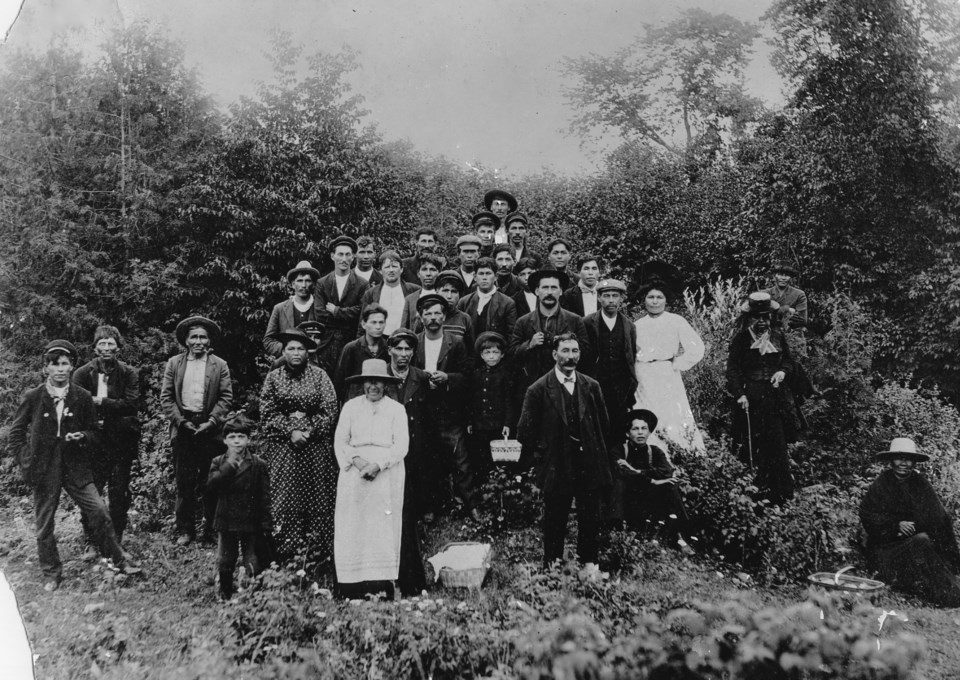
Education and control of Indian monies and provisions were controlled by the churches, says local elder of fractious life on Beausoleil Island
<aside> <img src="/icons/badge_red.svg" alt="/icons/badge_red.svg" width="40px" />
Jeff MonagueApril 11, 2022 6:00 PM (EDT)
</aside>
Church and School, Christian Island, Chimnissing Anishinabek.Huronia Museum Archives
Church and School, Christian Island, Chimnissing Anishinabek.Huronia Museum Archives
Mewizha (Meh-whi-zhah), long ago, when I was a boy, I lived in a segregated community. And I’m not just talking about the racial segregation of “Indians” on reserves of land set that were set aside for them by settler governments. That did exist. But not by itself. There was an even further segregation of our peoples.That segregation was enacted by the churches.
Christian Island, in Georgian Bay, where I grew up was a community divided by factions of Christian faith. At the time the village community had four main roads: one heading east to west and the other north to south, like a cross. This was an easy way for church leaders to control their flocks.
On the west side of the community were the Protestants and the United Church. This included an Indian Day School funded by the federal government and run by the Reverend Minister.
On the east side of the community was the Catholic Church, priests, nuns, and their flock. They also had an Indian Day School run by the priests and funded by the federal government.
The imposed segregation by religion was imported from Beausoleil Island which was the second stop on my people’s displacement tour. The first was Coldwater Narrows Reserve at present day Coldwater.
We were displaced to Beausoleil Island between 1838 and 1856 after being removed from our traditional hunting territories.
At Coldwater, the site of the first reserve, we were segregated from the settler community but not yet segregated by religious faction. The segregation by religion happened at Beasuoleil Island.
The Catholic community lived on the north end of the island and the Protestants were on the southern part of Beausoleil. Education and control of Indian monies and provisions were controlled by the churches.
That template was transferred to Christian Island in the 1856 displacement.
This is the environment I grew up in. Families were divided.
My grandmother and my aunts, my cousins, were Catholic. They lived on the east end of the community. The dividing line was the dirt road that ran north to south through the centre of the village.
When I visited my grandmother I had to take a back road behind the main part of the village or else I risked being accosted by the Catholic kids who were counselled by church leaders to dissuade us from entering their territory. This often meant being physically accosted and sometimes having your nose bloodied.
At each of our schools we dared one another to run the gauntlet far into one another’s turf. It was as if it were a rite of passage. A badge of honour.
The clergy in each of the churches forbade interfaith marriages. They actively counselled against it.
Somewhere in the middle of this murky quagmire were the “Indians” who practised their traditional spirituality and ceremonies. They lived on the outer edges of the community. They buried their dead in a separate unfenced burial ground. The church cemeteries had fencing.
Eventually, the clergy had a fence erected around the traditional burial ground and declared that the traditional burial grounds were closed forever. They punctuated that declaration by having an enormous rock moved to the entrance of that burial ground.